Impact
ArcaMind is working to build healthy, vibrant communities that are free from mental health crisis.
050
Community Helpers trained to work with clients
060
Organizations trained in evidence-based mental heatlh interventions
0600
Individuals trained in single session interventions
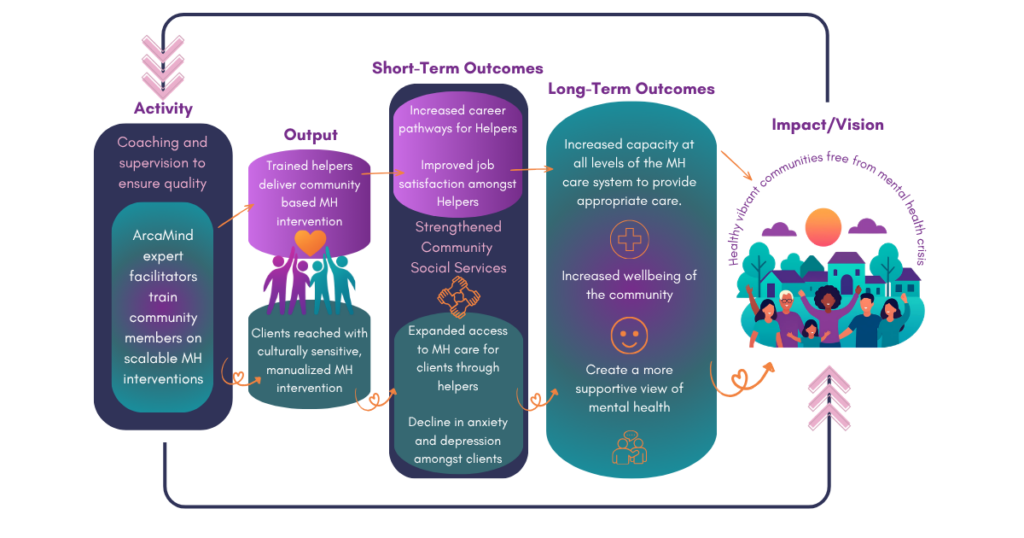
ArcaMind’s theory of change demonstrates how our work helps to build healthier and more resilient communities. ArcaMind expert facilitators train community members, or lay workers, to become “helpers” who deliver culturally sensitive, manualized mental health interventions, supported through ongoing coaching and supervision to ensure quality. These trained Helpers result in expanded access to mental health care and strengthened community social services for clients. At the same time, the interventions have a direct impact on the Helpers, improving job satisfaction, and creating new career pathways. In the short term, the initiative aims to reduce missed days of work/school, decrease emergency room visits and wait times for mental health care, increase wellbeing for individuals and foster more supportive community attitudes toward mental health. Ultimately, the long-term vision is to build healthy, vibrant communities that are free from mental health crisis by reducing anxiety and depression among clients and creating more accessible, community-based systems of care.
Monitoring, Evaluation and Learning
At ArcaMind, we believe meaningful impact starts with measurable results. Every program is guided by data and continuous learning to ensure we are making a real difference for the people and communities we serve.
We utilize a comprehensive monitoring, evaluation, and learning framework that help us measure outcomes, understand what works, and strengthen our programs over time. Throughout each project, we regularly review data, reflect on lessons learned, and make adjustments to improve effectiveness.
In addition to ongoing data collection, we work with external research partners to complete program evaluations that objectively assess outcomes, identify opportunities for improvement, and better understand the factors that contribute to success. This commitment to evidence and continuous improvement ensures our programs maintain fidelity as well as remain effective and culturally responsive.
Results of the Problem Management Plus (PM+) Pilot Evaluation
In January 2024, the AcraMind implemented a pilot of PM+ in the Twin Ports area (Duluth, MN and Superior, WI) with 24 Helpers representing 15 local community-based organizations. Many lessons were learned in terms of implementation that have now been adapted into our program, including a shorter and more flexible training model, the need for Helpers to be connected to an organization (rather than an individual providing services) and the importance of an adaption process for each organization to ensure the materials is culturally-responsive to the population.
A program evaluation of the pilot was conducted by The New School’s Center for Global Mental Health. The evaluation measured both client and Helper outcomes, both showing very positive results.
PM+ Helpers
Overall, trainees (Helpers) largely found the training to be engaging, intuitive, and beneficial.
Trainees also expressed gratitude and appreciation for the trainers. They consistently reported feeling supported by trainers and the safe space that they created throughout the training.
“Although role-plays felt uncomfortable, it played a central role in training”
One of the strongest positives of the training was the sense of belongingness and community that it built.
“I felt supported, and the training felt like a safe and a comfortable environment, that was respectful, and encouraging peer-learning experience”.
Client Outcomes
Similarly, client outcomes showed very positive results:
“It helped me to look more positively towards the future and… if something else were to come up some way [I would] keep that mental attitude that…And move forward, and just put one foot in front of the other and move.”
“It gave me a better outlook. It helped me to look more positively towards the future.”
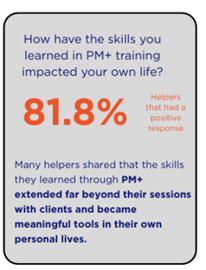
An unexpected outcomes was that trainees also reported using PM+ in their own lives:
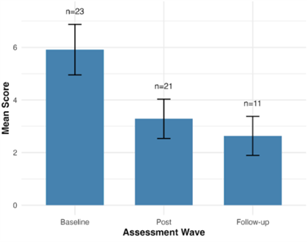
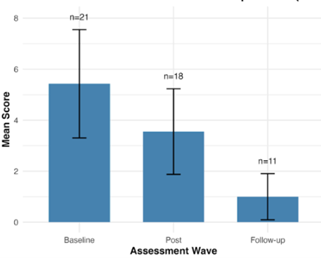
The sample size was small, but data showed a number of indicators with positive trends. The Generalized Anxiety Disorder standard tool (GAD-7), was used to measure clients change in anxiety, showing continued change through the 20-week follow-up.
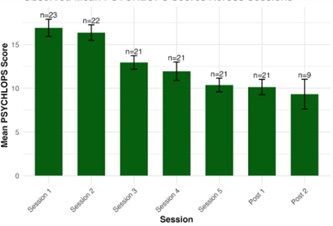
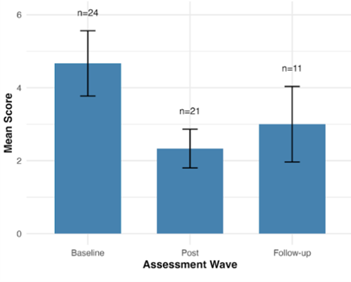
Similar results were observed in World Health Organization Disability Assessment Schedule (WHODAS), which is a standard tool to measure health and disability, as well as in session by session scores using the Psychological Outcome Profile (PSYCHLOPS), filled out by clients at each session to rate distress and functioning.
The sample size was small, but data showed a number of indicators with positive trends. The Generalized Anxiety Disorder standard tool (GAD-7), was used to measure clients change in anxiety, showing continued change through the 20-week follow-up.