Impact
The demand for practical mental health solutions is growing and ArcaMind is helping to meet this demand.
1
Helpers
1
Organizations
1
% Positive Helper Response
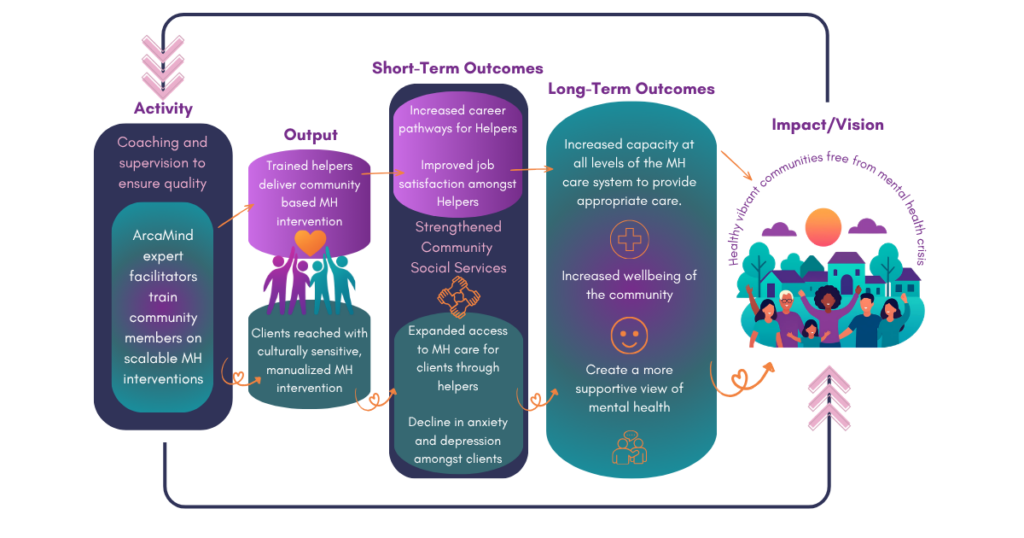
ArcaMind’s theory of change demonstrates how our work helps to build healthier and more resilient communities. ArcaMind expert facilitators train community members, or lay workers, to become “helpers” who deliver culturally sensitive, manualized mental health interventions, supported through ongoing coaching and supervision to ensure quality. These trained Helpers result in expanded access to mental health care and strengthened community social services for clients. At the same time, the interventions have a direct impact on the Helpers, improving job satisfaction, and creating new career pathways. In the short term, the initiative aims to reduce missed days of work/school, decrease emergency room visits and wait times for mental health care, increase wellbeing for individuals and foster more supportive community attitudes toward mental health. Ultimately, the long-term vision is to build healthy, vibrant communities that are free from mental health crisis by reducing anxiety and depression among clients and creating more accessible, community-based systems of care.
Problem Management Plus (PM+) has been implemented in more than 20 countries and is supported by a substantial evidence base demonstrating its effectiveness in expanding mental health care options, improving access to support, reducing stigma, and delivering cost-effective, scalable psychosocial care. Across settings, PM+ consistently achieves high participant engagement and leads to meaningful improvements in psychosocial functioning at the community level.
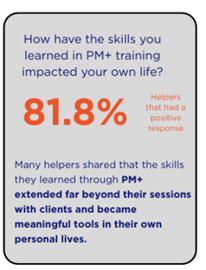
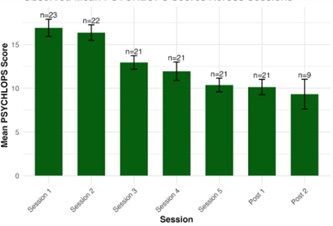
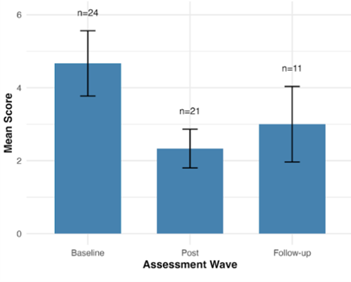
Findings from the Twin Ports pilot reinforce this global evidence. Participants experienced significant reductions in depression and anxiety, as measured by validated clinical tools (PHQ-9 and GAD-7), alongside improvements in general wellbeing (BRFSS). PSYCHLOPS scores showed a consistent decline throughout the course of the intervention, indicating steady progress in addressing the specific problems participants identified as most important to them. Notably, 81.8% of participants reported that the skills learned through PM+ extended well beyond the sessions themselves and became practical, lasting tools in their daily lives.
Beyond individual outcomes, PM+ demonstrated strong social and relational benefits. One of the most notable strengths of the program was the sense of belonging and community it fostered. Despite being delivered online, participants reported feeling supported and deeply connected to their cohort. As one participant reflected, “I felt
supported, and the training felt like a safe and comfortable environment that was respectful and encouraging of peer learning.” These experiences align with emerging evidence from a randomized controlled trial in New York City, with results expected to be published in May, further strengthening the evidence base for PM+ as an effective, community-centered mental health intervention.
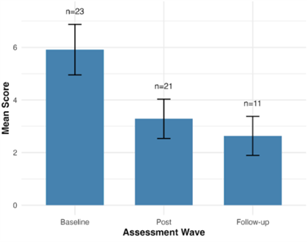
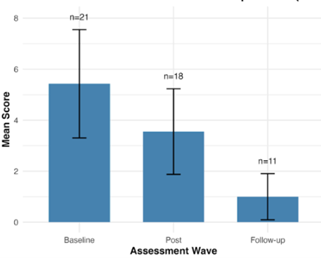
Reductions in Anxiety & Disability Scores Sustained Over 20 Weeks
Both the GAD-7 (Anxiety symptoms) and WHO-DAS (measure health & disability) showed significant decline during the intervention and further decline at 20 weeks.
SESSION RESULTS
Using the PSYCHOLPS (client perspective on their own psychological distress), a steady decline occurred over the 5-sessions.
More importantly, this was maintained and continued to drop 20-weeks post intervention.